
CIVIL LAW
DEFAMATION IN THE ONLINE ENVIRONMENT
Defamation is a civil law issue, it takes legislation from statutory and common law sources. The main source and legislation are Defamation Act 2013[1], Defamation Act 1996[2] and Defamation Act 1952[3]. 2013[4] and 1996[5] acts were the first piece of legislations that underlined the online factor of defamation and how it was not just evident in print media. Defamation laws and statutes use to be solely about print media, however, has evolved now into social media and the internet, especially through the Defamation Act 1996[6]. Section two to four[7] particularly are more relevant defences in the internet age. Although, these key legislations only apply in a limited sense in Scotland. Defamation Act 2013 states that the statement is not truly defamatory unless the pursuers reputation has been seriously harmed[8]. Damages will be awarded only if there is hurt feelings or injury to reputation, this includes companies as well as people, however, companies cannot claim for hurt feelings. There are certain criteria’s when raising a defamation action. Firstly, the statement must be communicated it also must be false and of a defamatory nature. There will be no remedy attached if the statement is true therefore veritas, even if harm has been caused due to the statement.
Furthermore, defamation includes an aspect of criminality as a person can seek to recover after professional misconduct, and question over their professionalism. For example, accusing a minister of stealing can affect their professionalism as well as their reputation. Winter v News Scotland Limited[9] was an accusation that a prison official had sexual relations with a prisoner. This resulted in concerns over the professionalism of the prison worker. This can further result inadequate consequences in his future career. Where a person’s profession is under question, certain offices are frequently expected to conform to a higher standard of conduct compared to those who do not hold office due to their position in society.
Defamation is pursued by a voluntary conduct, the person publishing such statement or image is aware that this has the intention to hurt feelings or defame. Defamation can assist in various forms from social media to news articles, fraud, identity theft and cyber-stalking[10]. These can lead to legal action depending on the defamation and pursuer. Even if you have not written the statement you will be liable if you publish it[11]. This means that even if you have not written the defamatory statement but have published it then you will be equally as liable, as stated by Lord Kyllachy in Wright & Greig v George Outram[12] case. This is a very common defamation on social media. Lennox Lewis and Others v Don King[13] was a major case on defamation. British fighter Lennox Lewis was managed by the boxing promoter Don King. They had problems within this relationship which resulted in libel lawsuit between the parties. It was argued in this case that as the defamation was online it regarded and targeted all jurisdictions and not just the one jurisdiction, as the defamatory statement was accessible worldwide.
Social media plays a huge role in defamation, especially as now everyone is a publisher. People communicate electronically and therefore publish opinions and stories online where thousands can access them. Whatever you publish online about someone is communicated and does not need to be printed for it to be defamatory, particularly if the post is malicious, injurious and false information. Social media platforms may not have responsibility of the defamatory statements a member of their platform posts or publishing’s. Although, this may vary according to the situation. They have the responsibility to remove any post that is reported to be defamatory in a reasonable time to escape liability[14]. Many internet users think there is less liability attached due to the anonymity of being behind a computer, however this is not the case anymore as personal details are entered when entering and being a member to social media accounts[15]. Also, accounts and computers can be tracked to access any information about that member or owner of the computer. More harm can be caused by online defamation as it cannot be removed, even if the publisher removes it, it can be downloaded or reposted which is still accessible[16].
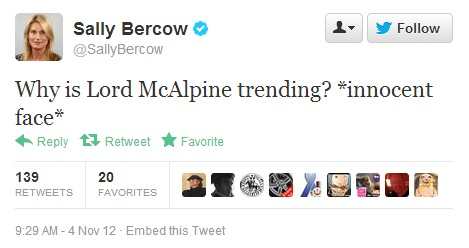
Twitter is probably the largest platform where defamation is evident as it is free and open for anyone to post or retweet a statement or image of someone and add their opinion on it which makes them liable for defamation as well as the author of the statement. Sally Bercow wife of former House of Commons Speaker John Bercow published a statement on twitter which lead to defamation of a Tory peer[17]. She was silenced on twitter for five years and returned earlier this year. She had linked Lord McAlpine falsely with allegations of child sexual abuse. High Court ruled she had defamed tory peer with this post on twitter[18].
Additionally, journalists face a sustainable amount of scrutiny when it comes to defamation as they publish opinions, stories and facts that will be in the public interest and educational[19]. Although, they must be careful with what they publish as it can be defaming someone or a company that could cause issues to the journalist and the company. In the Reynolds v Times Newspaper[20] case Lord Nicholls lays down ten factors, ten-point responsible journalism test. Case of whether the journalist acted in a responsible way, if the journalist has not then this can lead to liability. A minor difference to strict liability rule, Reynolds privilege. Reynold privilege was evident in the Jameel & Another v Wall Street Journal Europe[21] on the law of libel, applying a more flexible approach.
There is a contrary between Article Eight and Article Ten of the European Convention of Human Rights. Article Eight is ‘Right to Respect for Private and Family Life’[22] and Article Ten is ‘Freedom of Expression’[23], which is also the first Amendment in America ‘Freedom of Speech’[24]. Court will balance these two rights before deciding to award damages or not in a case. One would say it is easier in America to publish a defamatory statement online or print without being punished for it as the Freedom of Speech outweighs Defamation especially in the online world. Even though in the UK we have Freedom of Expression through the Human Rights laws we are still implemented to protect people’s reputation as well as their freedom to express their thoughts and feelings about someone or something.
Defamatory nature elaborates the fact that ‘does the statement lower the plaintiff of that member in the general society’, Sim v Stretch[25] case Lord Aitken followed a defamation test which established whether a statement or communication is legally defamatory or not.
Proving the statement is false is a defence in a defamation case. Philadelphia Newspaper Inc v Hepps[26] is an example of this as a newspaper published a statement that is of the public interest about a public official. The public official could not recover damages without showing that the statement is false. In these defamatory cases statements are presumed to be true unless proven otherwise by the plaintiff. The burden of proof lies on the defender to prove that the statement they have published is true or not of a defamatory nature.
Another defence is offer of amends this is when someone was lying about an issue and you have posted or published a statement or image about this thinking it was true which is a defence in defamation as it was published unwittingly. Under section 2 of the Defamation Act 1996 offer of amends can be made by the person who has published[27].
If the statement does not refer to the pursuer this will be an appropriate defence, the court will have to decide that the statement will be taken by a reasonable person that the statement is not about the pursuer.
The statement was not made or was not published therefore is also a valid defence.
Fair comment, the statement published must be a comment and not a fact, also in the public interest and if any facts are being referred to then these must be true and set out correctly. London Artists v Littler[28] Lord Denning MR stated that if a topic is of the public interest then everyone is entitled to make fair comment about it. Additionally, Lord Denning mentioned that the statement must be true or protected by privilege.
Defence of innocent dissemination is stated in section 1 of the 1996 act[29]. This defence is adequately acceptable when the defendant is not the author or editor of the statement. They are not directly responsible of the statement, although, the person must show that reasonable care was taken when publishing the statement, also that they had no knowledge of what their publication caused. The criteria that shows a person has taken reasonable care is laid down in section 1(5) of the Defamation Act 1996[30], and in the Godfrey v Demon Internet[31] case.
To provide an overview it is evident that United Kingdom defamation laws have led to a self-censorship to those who wish to publish their opinions or stories online or on print media. Which is a concern as this is not the case in various other jurisdictions like the United States. Although the UK has targeted this issue and implemented various laws especially the Defamation Acts, as defamation is an issue that can lead to hurt feelings of many and a damage to the reputation of those being defamed. There are various defences that have led to different court decisions. Defamation is also a concern online as many believe liability is not attached when publishing or commenting online, however this is not the case and the same laws apply.
[1] Defamation Act 2013
[2] Defamation Act 1996
[3] Defamation Act 1952
[4] Defamation Act 2013
[5] Defamation Act 1996
[6] Defamation Act 1996
[7] Defamation Act 1996 section 2 to 4
[8] Defamation Act 2013
[9] Winter v News Scotland Limited
[10] ‘Defamation and Libel Online’ (Reputation Defender), < https://uk.reputationdefender.com/defamation-libel-online/> accessed 15 December 2019
[11] ‘Online Defamation Law’ (Eff.org) < https://www.eff.org/issues/bloggers/legal/liability/defamation> accessed 15 November 2019
[12] Wright & Greig v George Outram
[13] Lennox Lewis and Others v Don King
[14] ‘ Internet and online defamation in the UK’ (adlexsolicitors) < https://www.adlexsolicitors.co.uk/what-we-do/content-removal/internet-defamation/> accessed 15 November 2019
[15] ‘Defamation and Slander on the Internet’(All Law) < https://www.alllaw.com/articles/nolo/civil-litigation/defamation-slander-internet.html> accessed 15 November 2019
[16] (Traverse Legal) < https://www.traverselegal.com/defamation-libel-slander/> accessed 15 November 2019
[17] (TheGuardian.com) < https://www.theguardian.com/politics/2013/may/24/sally-bercow-tweet-libelled-lord-mcalpine> accessed 15 November 2019
[18] (BBC.co.uk) < https://www.bbc.co.uk/news/world-22652083> accessed 15 November 2019
[19] ‘Libel and Defamation in Journalism’ (Oxforfre.com) < https://oxfordre.com/communication/view/10.1093/acrefore/9780190228613.001.0001/acrefore-9780190228613-e-834> accessed 15 November 2019
[20] Reynolds v Times Newspaper
[21] Jameel & Another v Wall Street Journal Europe
[22] European Convention of Human Rights Article 8
[23] European Convention of Human Rights Article 10
[24] First Amendment
[25] Sim v Stretch
[26] Philadelphia Newspaper Inc v Hepps
[27] Defamation Act 1996 section 2
[28] London Artists v Littler
[29] Defamation Act 1996 section 1
[30] Defamation Act 1996 section 1(5)
[31] Godfrey v Demon Internet
CRIMINAL LAW
COMPUTER MISUSE AND HACKING IN THE ONLINE ENVIRONMENT
Computer Misuse Act 1990[1] relates to unauthorised access were someone remotely accesses data or an employee or former employee accesses data from a place they are not authorised to enter or use. This act was put into legislation to secure computer materials and to criminalise any unauthorised access. 1990 Act also includes situation where information collected by unauthorised access is used to commit further crime, for example selling personal information of someone on the black net.
First section of the act underlines unauthorised access when the system is available for you, but you are using it to find out something you should not be[2]. Hacking or unauthorised access to information contained within a computer system. For example, when an employee accessed part of the system that they have no authorisation on. Employer needs to reiterate these boundaries with their employees so that they are aware of them and do not breach this. An offence is not committed if the employee was not aware about this boundary. In the case R v Bow[3] the importance of an employer reiterating this issue is evident. Case about the access to unauthorised data by an employee, clearly where someone does gain unauthorised data it is a crime. Bow had accessed data, but the court made it clear that the employer had to make it clear what she can and cannot access. Conviction to section one is maximum 12 months imprisonment and or fine not exceeding £5000 in England and Wales and £10000 in Scotland. Indictment conviction can be up to 2 years imprisonment and or unlimited fine[4]. In the R v Neil[5] case section 1 was evident. A police officer used police national computer to contact sex workers online, he was unauthorized to access such information through the national computer. This was not for any ongoing investigation therefore had to reason to be done by the work computer. This misuse resulted in unpaid work in the community and had to pay post, additionally police officer lost his job that he had been doing for 16 years. Furthermore, R v Helen[6] was a case about stealing data were Helen stole information that she was not allowed to access. This was to look at social care records about those who accused her husband of sex offence, which was a breach of the Computer Misuse Act[7].

Accessing data in the view to sell on information on the dark net is section 2 of the act. Extracting the data to make further crime with the intention to sell the data on or with the intention to commit further. Example of section two is stealing information or data to facilitate further crime[8]. This could be accessing personal files like accessing someone’s cloud account, downloading pictures or videos. This information can be collected in order to blackmail the person the information belongs to. This is mostly used to gain information about a celebrity then threaten them. Section 2 convictions are for summary, 12-month imprisonment and or fine not exceeding £5000 England or Wales or £10000 for Scotland. Indictment results in imprisonment for a term not exceeding 5 years and or an unlimited fine. R v Adam[9] a case about stealing data. Adam attempt to steal and find out about deliveries of this precious metals and gold in thought of committee more offences after. Another example is the R v Andrew Skelton[10] case. Where an employee of morrisons leaked details of staff of morrisons online. This could lead to subsequent offences as information leaked was wages, bank details, names and addresses. He was jailed for 8 years which was a significant prison sentence as it is a combination of different offences.
Section 3 of the 1990 act has the conviction on indictment up to 10 years imprisonment and or an unlimited fine and in unauthorised acts within intent to impair or with recklessness as to impairing the operation of a computer for example virus or mail bombing[11]. Distributed denial of services occurs when someone overloads a particular website causing the website to crash. R v Lennon[12], England and Wales high court case about email bombing. Where the defendant had sent over 500,000 emails resulting in email bombing the organization. Lennon had downloaded a software that would do this, which resulted in damages to the claimant. In these circumstances the person should be punished as it is used to provide damages one way or another.
Section 3za is the causing or creating serious damage to a system[13]. Where maybe person is seeking to shut down parts of it or maybe even all of it. Hacking into an electricity system to cut the electricity of a place or maybe hacking into a water system or computer to put chemicals into the water and cause harm to those who drink, NHS – damage to human health, damage to environment, national security and economy can be example of section 3za. On indictment up to 14 years imprisonment and or a fine, also could be a life imprisonment if people are harmed like in cases of causing loss of life. Substantial in nature.
Section 3a is when someone creates a system and or software that has a hacking element that is looking to accomplish all the above sections[14]. Summery conviction is 12 months imprisonment and or a fine of up to £5000 (England and Wales) and £10000 Scotland, on indictment two years imprisonment and or an unlimited fine. The R v Andrew Meldrum[15] case resulting in a 12-month suspending service. As Andrew was accessing other people’s computers to collect images, a spying software on victims’ computers. This was with a view to commit more offences as he was compromising pictures and images. His software activated webcam on the computer, which resulted in him to convert 11,000 images.
Computer Misuse Act does not give a clear definition of what a computer is. However, a definition is provided in case law by Lord Hoffman in DPP v Jones ‘a computer is a device for storing, processing and retrieving information…’[16]. Therefore, this can be used as precedent to identify the device that has the information and data on it as a computer.
In contrary, potential vulnerabilities within websites or computer systems must be identified and checked by those responsible. Systems that contain important information, data or personal information, is your system up to date and protected and do you have anti-virus downloaded for example on a workplace computer that contains important data on customers?
The Serious Crime Act 2015[17] applies to UK citizens abroad that have committed such an offence. Section 1 ‘Unauthorised Access to Computer Materials’[18] is where someone seeks to gain access for example police computer to access information about someone who they should not be for their own good, they are not authorised to do it then significant penalties will be attached to section 1.

Lauri Love is a significant name when mentioning Computer Misuse. Love hacked into major systems in the United States, FBI, US Central Bank and Nasa[19]. He was first arrested in 2013 however his case has been going on for years. He accomplished to access many data from these US systems including Federal Reserve and many more. He was released in 2013 however got rearrested many times as he continued his hacking, he feared of an extradition in the US and stated that this would result in him dying in jail. The UK parliament worked with Love to gain a block to his extradition and began hearings in the Court of Appeal, as he won an extradition appeal. Love stated that he had depression and Asperger’s syndrome. Lauri stated that he hoped that his case would be a precedent for future similar cases[20].
Where there is a claim for the misuse of computer there are necessary requirements that must be attached for there to be a breach. Mens rea must be evident here, person must know they were not authorised to access the information or data, did they have the intention to do so, where they aware of the boundaries attached. Actus reus will be easily proven if the person has clicked on the link or entered a file, they should not have access to then this will be evident. Director of Public Prosecutions v Bignell[21], a case about the access of information through the third person. In this case the police officer wanted to access certain information, however it was not for an investigation and for his own purposes. To access this information, he had to go through an operator which provided him with what he wanted, as the operator had access and was not breaching any law while accessing it. There was no prosecution attached here as the police officer never had access but did not access this information and the operator had access and was not aware on what the information was for. Therefore, this was a disciplinary issue which was for the police to deal with internally without any court proceedings. Mens rea was evident here as the police officer knew he had no authorisation but still wanted this information, however there was no actus reus he was not the one who accessed the information.
To conclude, Computer Misuse Act is a significant piece of legislation to ensure the security of information and data on computers and systems. Many have been punished by this act and face scrutiny. Although, care must be taken by those responsible of devices too, in order to keep it safe.
[1] Computer Misuse Act 1990
[2] Computer Misuse Act 1990 section 1
[3] R v Bow
[4] Computer Misuse Act 1990 section 1
[5] R v Neil
[6] R v Helen
[7] Computer Misuse Act 1990 section 1
[8] Computer Misuse Act 1990 section 2
[9] R v Adam
[10] R v Andre Skelton
[11] Computer Misuse Act 1990 section 3
[12] R v Lennon
[13] Computer Misuse Act 1990 section 3za
[14] Computer Misuse Act 1990 section 3a
[15] R v Andrew Meldrum
[16] DPP v Jones
[17] The Serious Crime Act 2015
[18] The Serious Crime Act 2015 section 1
[19] (Judiciary) < https://www.judiciary.uk/wp-content/uploads/2018/02/lauri-love-v-usa.pdf> accessed 14 November 2019
[20] (The Guardian) < https://www.theguardian.com/law/2018/feb/05/hacking-suspect-lauri-love-wins-appeal-against-extradition-to-us> accessed 14 November 2019
[21] Director of Public Prosecutors v Bignell
 ICT LAW BLOG